
-
Home
> -
Blog
> -
Parent Category
> -
Category
> - Page Title
1
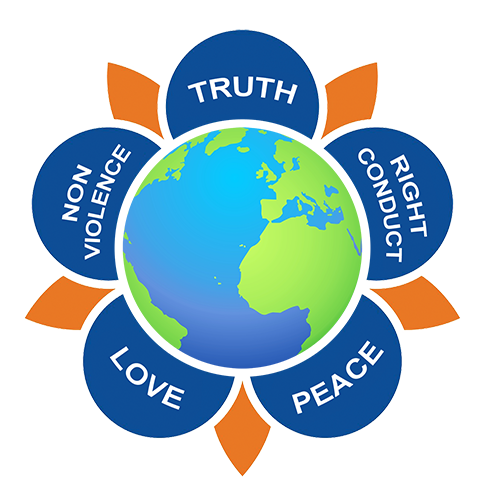
Truth
Truth represents our true self, who we are as a person, not limited only to our name, gender or race, but on the deeper level such as “who am I?”, “what is the meaning of life?”, “what is my purpose of life?”, or “where did I come from?”. “who” we are remains the same even if we end up losing part of our body. In other words, truth can be referred to our ‘soul’ or ‘conscience’.
2
Right Conduct
Right Conduct is the manifestation of ‘Truth’ in action. Once we understand the truth, the next step is to put it into practice. As discussed above, the core values are innate, it is the expression of the value which differs from one to another. In ‘right conduct’, that expression of the value is what it is referred to. For example, if I am a mother (truth), then I should act as a mother by caring for my child (right conduct), regardless of my other role as an employee. The truth remains the same — that I am a mother — although the way each mother expresses that role may differ. This reflects how values can be expressed differently. To understand Right Conduct, one needs to be fully present in the moment in order to think, act, and respond appropriately at the right time.
3
Peace
Peace represents the contentment we have within ourselves. Once we are able to conduct ourselves righteously in the present moment as we connect with our consciousness, peace will emerge. In the other words, truth combined with right conduct will create peace. For example, when I have to be a mother in front of my child, I should not be thinking of the due date I have for my work, as it would affect my presence with my child. When a person is conflicted among the roles he or she has, they would not be able to feel content and calm. Hence, peace cannot be attained.
4
Love
Love refers to the feeling that should emerge as the driving force behind whatever we do. Love here is not limited to the emotions we have for family, partners, friends, and others. It refers to the energy that flows from our pure heart — unconditional, giving, and unselfish. When the energy of love emerges within us, there will be no hatred or any form of negativity. With love as our driving force, whatever we see, do, and feel will become expressions of our pure emotions.
5
Non-Violence
Non-Violence refers to non-violating actions. Non-violence is the culmination of all the values above. When a person is filled with peace and love, together with their conscience (truth), they will not act violently (non-violence) toward others or themselves. One way to practice this is by being and doing things in moderation, or in ‘enoughness’, in all aspects of life. For example, when eating, people will feel sick when they overeat, but they will feel weak when they do not eat enough. Both of these actions violate themselves and their health, which means they are not practicing non-violence. In order to practice non-violence in this case, a person should eat just ‘enough’ — not too much and not too little — so they can function well with the food they consume. This principle can also be applied to other aspects of life, such as the use of electricity, water, words, and others.
Additionally, if the conscious mind (Head) refers the possible action to the ‘inner self’ (Heart), the resultant action will be the right action (Hands). Therefore, the sync of Head, Heart and Hands (3H) should be the base of all of our speech and action.